01
Venue Entrances
Officers with the check-in team at the door, keeping queues moving and credentials checked the way the host decides.
View details
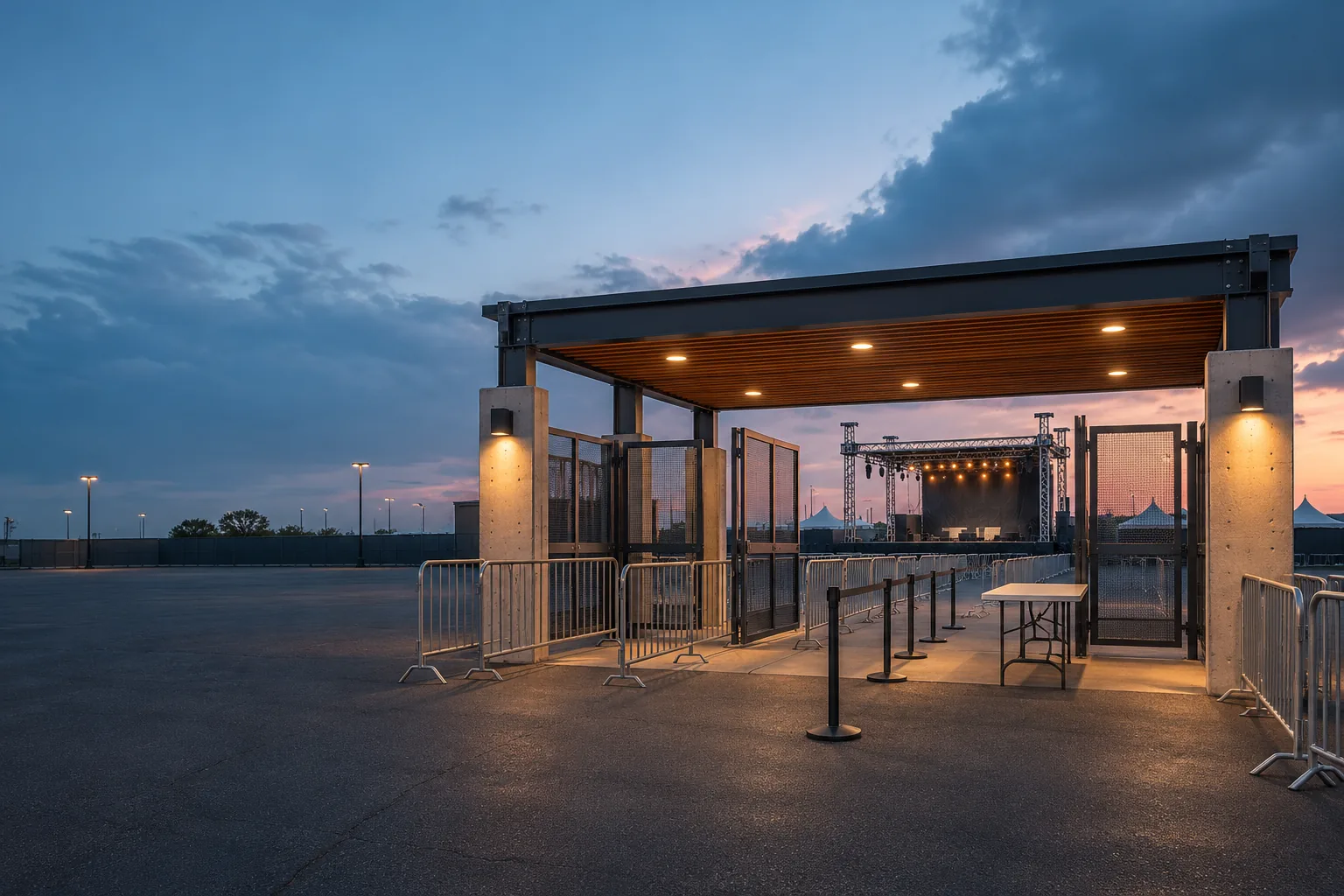
Hire event security for weddings, private parties and corporate events across the Bay Area: officers for guest entry, bag checks, credentials, backstage doors and vendor load-in, from setup to the last guest out.
01
Officers with the check-in team at the door, keeping queues moving and credentials checked the way the host decides.
View details02
Attention around vendor arrival, service entrances, deliveries, and setup periods.
View details03
Visible presence near staff-only, backstage, storage, or other controlled spaces.
View detailsAn event has distinct phases, and each needs its own attention. Vendor arrival and setup bring traffic to service entrances and loading access, guest arrival brings queues, check-in and credentials, and the end of the night brings exits, coat check and vendor load-out.
Throughout, a visible presence stays near staff-only, backstage and storage spaces, whether the night is a warehouse party in SoMa or a store launch near Union Square. Event coverage can sit alongside on-site personnel for venues that also need a steady presence on non-event days.
Event coverage starts with the run of show. The host shares when vendors load in, when doors open, how guests check in and when the venue needs to be clear, and HALO places personnel and patrol attention around those moments. Short-notice events get the same planning questions on a tighter timeline.
Venues that also run regular business on non-event days can keep one contact order for both, so incident notes from an event night land with the same people who read the weekday notes.
The door is where an event either flows or stalls. Personnel stand with the check-in team, keep the line moving along the route the host marks and direct guests with credentials toward the correct entrance. Guests without the right credential are handled the way the host decides, whether that means a guest-list check or a call to the host contact.
Inside, a visible presence near backstage doors, storage rooms and green rooms keeps those spaces for staff and performers. As the event closes, attention moves to exits, the coat check and the loading area while guests leave and vendors pack up.
A warehouse venue or gallery in SoMa may run late, with load-in in the afternoon and guests arriving after dark at street-facing doors. A hotel or retail flagship near Union Square may host a launch or private evening that mixes shoppers, invited guests and building staff in one lobby.
When a campus in Redwood Shores or Palo Alto hosts an all-hands meeting or a family day, event coverage can work around the campus’s normal access rules and hand back to regular coverage once guests leave.
Venues and campuses that host events every week or every season can keep one standing coverage plan and adjust it for each date. The entrances, restricted areas and contact order stay the same, while start times, guest flow and vendor schedules change with the program.
A recurring plan also makes short-notice additions simpler, because the venue’s layout and access rules are already part of the assignment. The host only needs to share what is different about the next event.
Event entrance security sets the tone for the whole night. Officers at the door screen each guest against the list or ticket, run bag checks against the host’s list of items that stay outside and send oversized bags to the coat check. A separate lane for staff, performers and vendors keeps the guest line short.
Weddings, private parties and corporate events each screen differently. A wedding may want a friendly check at the reception door and an eye on the gift table, while a house party needs a quiet watch for uninvited guests and a company celebration needs badge checks at every entrance. Hosts who hire event security for one of these nights tell HALO how firm the door should be, and officers hold to it.
Once guests are inside, attention turns to crowd flow and exits. Officers keep aisles, stairways and fire exits clear, manage re-entry at the door and ease pressure at the bar or the stage front. At closing they guide guests out through every exit in use so the street and the rideshare curb do not jam.
Event officers bill by the guard-hour. Based on 2026 market rates, most events across the Bay Area bill $49 to $66 an hour, a small, simple gathering can come in near $47, and the largest, latest-running nights reach about $82. Crowd size and the finish time move that rate far more than the venue’s city does.
Count officers, multiply by hours, then by the rate. A San Francisco venue hosting a 300-guest evening event from 5 p.m. to midnight staffs four officers: one at vendor load-in, two at the guest door for credentials and queues, and one near backstage. That is 28 guard-hours, and at $60 an hour the night comes to about $1,680. A two-day conference that keeps those four officers for nine hours each day totals 72 guard-hours.
The upper end comes with larger crowds, more entrances and credential points, late finishes, holiday dates and bookings made close to the event, which typically carry a premium. Setup and load-out hours count the same as show hours, so a long vendor window raises the total. A daytime gathering with one entrance and a short run of show stays near the bottom. Send the date, venue, guest count and entrances through the quote form, and HALO prices the run of show from there. The security guard cost guide compares event rates with regular posts.
Resources
Service areas
Industries
Services
A few useful answers
Yes. Event coverage can be unarmed or armed, and armed officers hold exposed-firearm permits. Note which you need on the quote form.
Yes. Short-notice coverage is available. Share the venue, the event hours and the main concern on the quote form, and HALO follows up to plan entrance and restricted-area coverage.
Yes. Coverage runs through the scheduled closing, including exits, the loading area and vendor pack-up.
Yes. Personnel follow the host’s access rules and work with the venue’s check-in and operations team, bringing issues to the host contact named for the event.
Yes. Officers stand with the check-in team, match each guest to the list or credential style the host sets and send anyone without one to the host contact.
Yes. Officers check bags at the entrance against the items the host wants kept out, and point guests with large bags to the coat check before they join the line.
Send the date, the venue, the guest count and the entrances in use through the quote form. HALO plans the door, the gift or coat area and the close of the night, and prices the coverage from there.
Between events, a venue can add camera monitoring, office coverage or retail security.
01
Live watch on venue doors and loading cameras before and after the doors open.
CCTV Monitoring and Surveillance02
Coverage for lobbies, workplace access, common areas, parking, and deliveries.
Corporate Campus and Office Security03
Visible security presence around entrances, customer traffic, and merchandise areas, with coverage for receiving and closing.
Retail Theft Prevention