
Guide
Planning security for a private or corporate event
Good event security follows the run of show. This guide walks through entrances, guest flow, positions and working with the venue and host.
Start with the run of show
Event security planning follows the event’s own timeline. Load-in, setup, doors, the main program, the final hour and load-out each put people in different places, and coverage should move with them. Before anything else, write out that timeline with actual clock times beside each stage.
Share the timeline with everyone involved: the venue’s operations team, the caterer, the production crew and the security team. When all of them work from one schedule, nobody is surprised when a truck pulls up at the service door or when the main doors open to guests.
Note the hours when the venue is open but the event is not, too. A SoMa gallery that keeps regular visitors in one room while a private dinner sets up in another needs both groups kept apart from the start.
Entry points and guest flow
List every entrance the event will use and decide what each one is for: a main guest entrance with check-in, a separate door for performers or speakers, a vendor entrance at the loading area, and emergency exits that stay clear but closed. Doors with no planned use should be locked or watched.
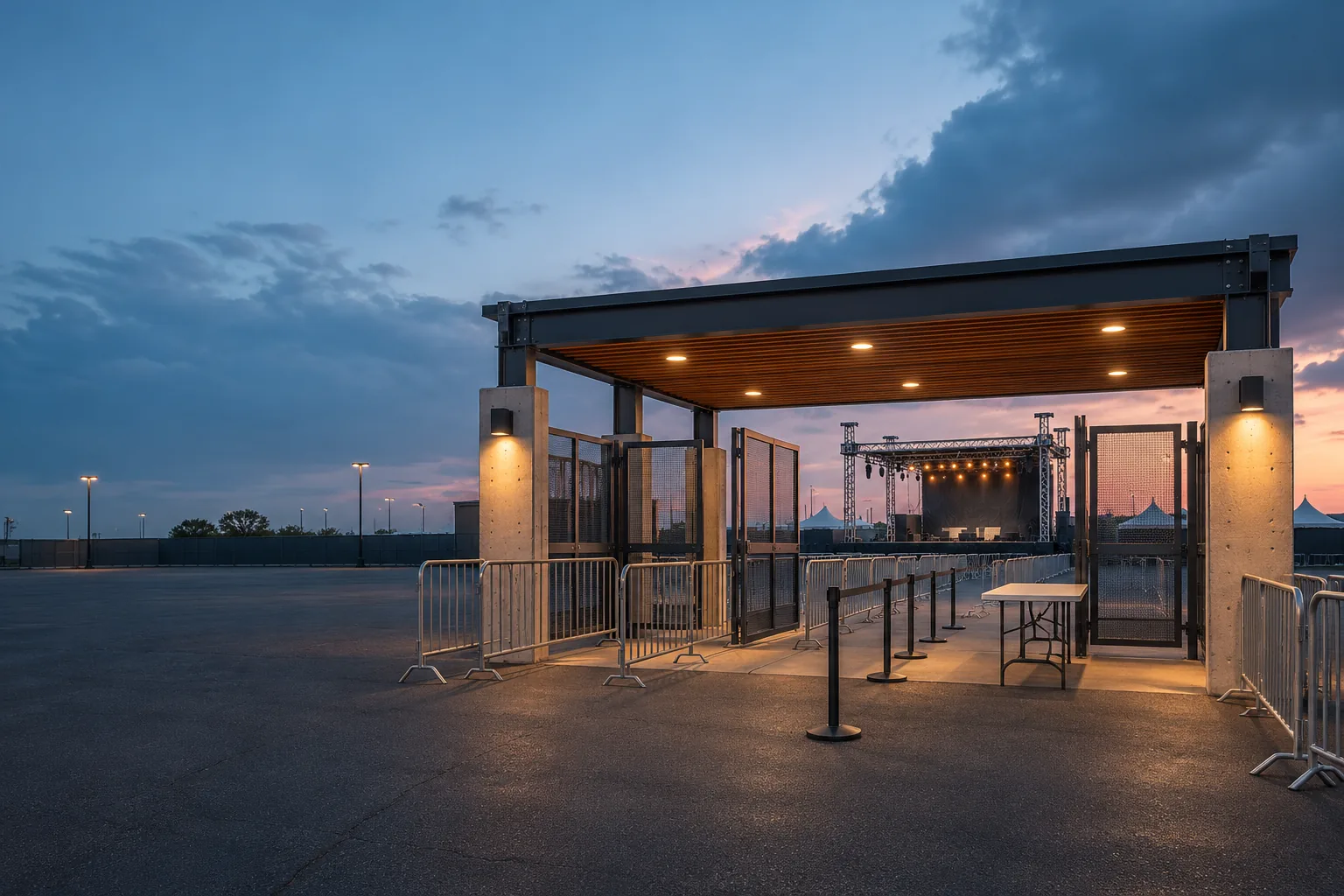
Then think about the line. Where will guests wait, how will they check in and what do credentials look like? A queue along a sidewalk needs a different setup than one inside a lobby. Personnel can stand with the check-in team, keep the line on the route the host marks and point guests toward the right door.
Decide in advance how to handle a guest who is not on the list or a credential that does not match. Whether the answer is a guest-list check or a call to the host contact, settling it before doors open keeps the entrance moving.
Positions inside the venue
Once guests are inside, attention shifts to the spaces that are not meant for them: backstage areas, green rooms, storage, the kitchen and any office the venue keeps private. A visible presence near those doors keeps them for staff and performers. Coat check, gift tables and the bar are also common positions at larger events.
For venues that also operate on regular days, event coverage can sit alongside on-site security personnel who already know the building’s normal access rules.
Plan for the moments when guests move all at once, such as the end of a keynote or the start of dinner. Those shifts crowd hallways and stairs, and a person stationed at the turn keeps the flow heading where the host wants it.
Working with the venue and the host
Every event has a host contact for the night, the person who makes decisions when something comes up. Name that person before the event, along with a backup and the venue’s own operations lead. Personnel bring questions and observations to that contact, and incident notes from the night go to the same person afterward.
Venues usually have house rules about which doors open, where vendors unload and when the room must be clear. Share those rules with the security team ahead of time so coverage fits the venue from the first truck to the last guest. Corporate campuses hosting all-hands meetings or family days follow the same idea, with event coverage layered over the campus’s usual office security.
Retail flagships near Union Square that host launch nights mix shoppers with invited guests, and the guide to store receiving and closing security covers how the store locks up afterward.
From last call to load-out
The end of an event is often the busiest stretch for security. Guests stream toward the exits, coat check gets a rush, vendors start breaking down and trucks return to the loading area. Coverage should run through the scheduled close, with attention on exits, the loading door and any rooms holding equipment until the venue is clear.
For a last-minute date, send the venue address, start and end times and your biggest concern through the quote form; HALO Private Security reviews it and follows up on entrances and restricted areas. More on the service is on the event security management page.
Services
Related service
A few useful answers
Quick answers
How early should event security arrive?
Coverage can start with vendor load-in, so service entrances and setup areas have attention before guests arrive.
Can security help manage the check-in line?
Yes. Personnel work with the check-in team, keep the queue on the route the host marks and direct credentialed guests to the correct entrance.
Who makes decisions during the event?
The host contact named for the night. Personnel bring questions and observations to that person and follow the host’s access rules.
Can a recurring event series use one plan?
Yes. The entrances, restricted areas and contact list stay the same, while the timeline and guest flow are updated for each date.